Cheval des Andes - 2023
The Grand Cru Wine of Argentina
Bordeaux X Mendoza
The Grand Cru Wine of Argentina
How a Bordeaux château came to make wine
in Mendoza, and what the 2023 vintage tells us.
in Mendoza, and what the 2023 vintage tells us.
29/07/2026 • 5 MIN READ
Two estates, one idea
Château Cheval Blanc, a Premier Grand Cru Classé estate in Saint-Émilion, does not usually produce wine outside Bordeaux. Cheval des Andes is the exception. Since 1999, the estate has worked with Terrazas de los Andes, one of the first producers of high-altitude wine in Mendoza, on a wine made together in Argentina.
Bordeaux wines are usually blends, and Cheval Blanc is known for how it blends them. The idea for Cheval des Andes was to use that same skill on Malbec, the grape Argentina is known for.
The 1929 vineyard
The project began with a vineyard.
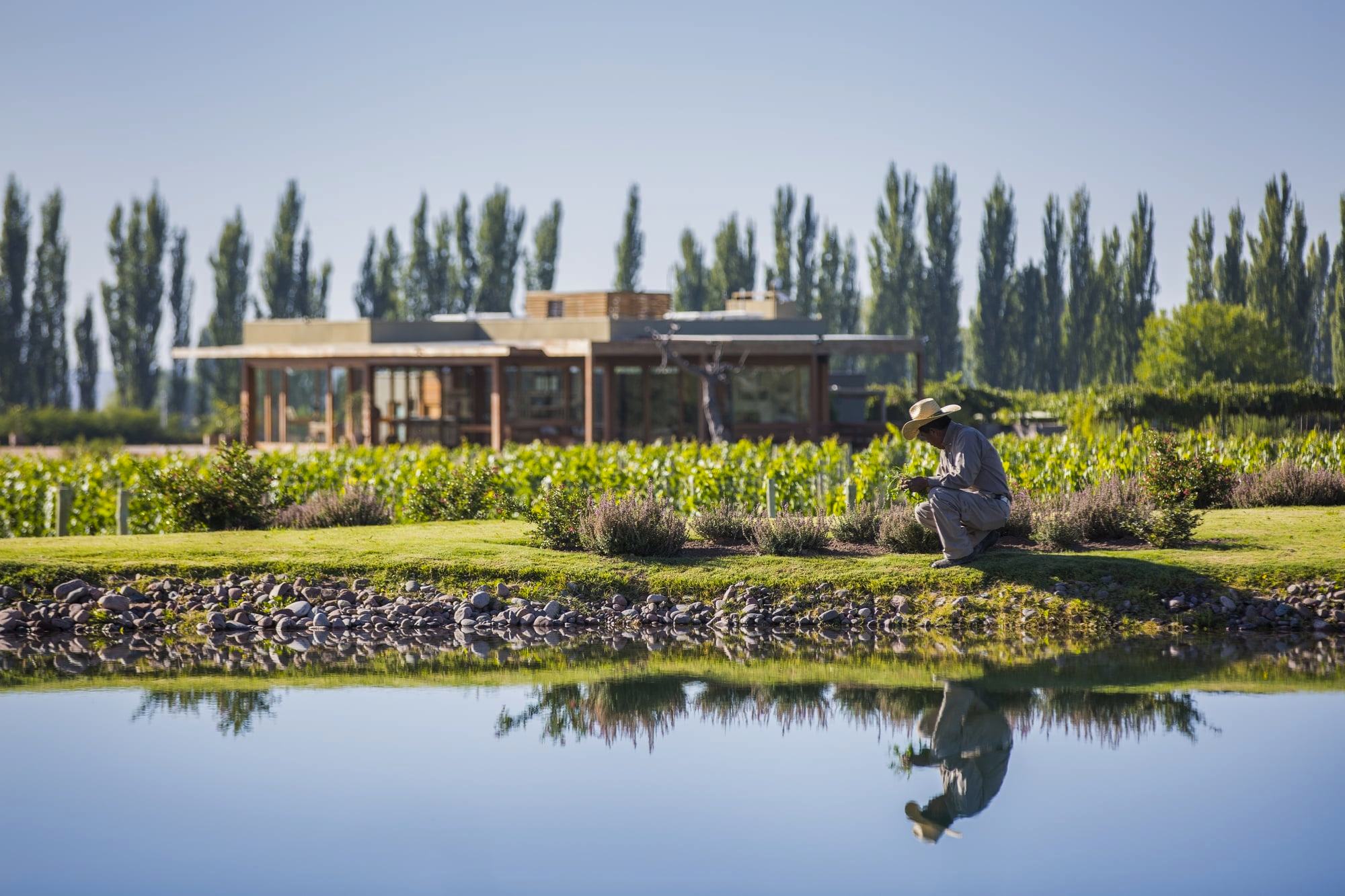
Las Compuertas sits at 1,070 meters in Luján de Cuyo, the highest vineyard on the right bank of the Mendoza river. Its Malbec vines have never been grafted; they have grown on their own roots since 1929, and remain there today.
Las Compuertas sits at 1,070 meters in Luján de Cuyo, the highest vineyard on the right bank of the Mendoza river. Its Malbec vines have never been grafted; they have grown on their own roots since 1929, and remain there today.
Pierre Lurton of Château Cheval Blanc studied the vineyard together with Terrazas’ Roberto de la Mota. Cheval des Andes was born in 1999, and the 1999 vintage was its first.
The Andes terroir
Las Compuertas covers 32 hectares of limestone, sand, and clay soils, in a dry climate that receives around 200mm of rain a year.
The second vineyard, Altamira, lies further south in the Uco Valley at 1,150 meters, in cooler conditions. It covers 14 hectares, planted mainly with Malbec in 1945. Together, these two vineyards make up Cheval des Andes.
Critical Review
Suckling’s tasting note describes currants, tobacco and grilled herbs, with silky tannins. His conclusion, in his own words: “Already approachable, but can hold for a decade, if not more.”
98points
What this meas for your cellar
That is the essential question with any new release: open it now, or hold it for later. With the 2023, either choice is reasonable, and your advisor can help you decide which suits you better.
Your wine advisor can tell you more about pricing, formats, and availability
Vintage Cellar • Esplanade de Pont-Rouge 5, 1211
Geneva, Switzerland
Geneva, Switzerland
© 2026 Vintage Cellar. All rights reserved.


