Optimal Fine Wine Storage: 9 Proven Secrets for Success
For the serious enthusiast, a bottle of fine wine is far more than a beverage; it is a living, breathing historical document and a high-performing financial asset. When you acquire legendary vintages perhaps a First Growth Bordeaux or a rare Grand Cru Burgundy the transaction is merely the beginning of a long-term commitment. The true value of these assets is realized not at the point of sale, but through years of meticulous optimal fine wine storage. Without the correct environment, the most prestigious labels can degrade into expensive vinegar, stripping away both the sensory experience and the investment potential.
At Vintage Cellar, we understand that fine wine preservation is an exact science. Whether you are building a personal vault or utilizing professional wine storage, the goal remains the same: to slow the chemical evolution of the wine, allowing it to develop complex tertiary aromas while maintaining structural integrity. This comprehensive guide explores how to choose the right storage for fine wine, ensuring your rare wine bottles and collectible wine assets are protected for decades to come.
The Physics of Temperature: The Gold Standard for Aging
The most critical pillar of optimal fine wine storage is temperature stability. Chemical reactions, including those that govern wine maturation, are temperature-dependent. According to the Arrhenius equation, the rate of a chemical reaction ($k$) increases exponentially with temperature:
$$k = A e^{-\frac{E_a}{RT}}$$
Where:
- $k$ is the rate constant
- $E_a$ is the activation energy
- $R$ is the universal gas constant
- $T$ is the absolute temperature in Kelvin
For wine, even a small increase in $T$ can drastically accelerate oxidation and the breakdown of delicate esters. The best temperature for aging wine is universally recognized as $55^{\circ}\text{F}$ ($13^{\circ}\text{C}$). While a range of $50^{\circ}\text{F}$ to $59^{\circ}\text{F}$ is acceptable, consistency is paramount. Rapid fluctuations cause the liquid inside the bottle to expand and contract, which can compromise the seal of the cork and invite oxygen ingress. When you choose the right storage for fine wine, you must ensure the system can maintain this “Gold Standard” without variance.

Humidity: Protecting the Seal of Rare Wine Bottles
If temperature is the protector of the liquid, humidity is the protector of the cork. For long term wine cellaring, maintaining a relative humidity ($RH$) of $60\%$ to $70\%$ is essential.
If the environment is too dry (below $50\%$), the cork can dry out, shrink, and lose its elasticity. This allows air to enter the bottle, leading to rapid oxidation. Conversely, humidity above $80\%$ can encourage mold growth and damage the paper labels of your rare wine bottles, which significantly impacts their resale value. Utilizing a high-quality wine cellar humidity monitor is the only way to verify these conditions. A wine cellar humidity monitor provides real-time data, allowing you to adjust your luxury wine storage solutions before permanent damage occurs to your collectible wine.
Vibration Free Wine Storage: The Art of Stillness
It is often overlooked, but vibration free wine storage is crucial for high-end fine wine preservation. Vibrations from nearby machinery, heavy foot traffic, or poor-quality cooling units can disrupt the natural chemical maturation of the wine.
Vibrations can:
- Stir up sediment (tannins and tartrates), preventing them from settling naturally.
- Induce kinetic energy that accelerates molecular activity, potentially altering the wine’s flavor profile.
- Affect the integrity of the cork’s seal over several years.
A truly vibration free wine storage environment ensures that the complex chemical chains formed during aging remain undisturbed. When considering professional wine storage, always inquire about the dampening technologies used in their climate controlled wine cellar facilities. This is a non-negotiable requirement for protecting rare wine assets.
Light and UV Protection for Wine Collection
Light, particularly ultraviolet (UV) radiation, is the enemy of collectible wine. UV rays can penetrate even dark glass bottles, triggering a reaction with riboflavin (Vitamin B2) and amino acids to produce foul-smelling sulfur compounds (methanethiol and dimethyl disulfide). This is often referred to as “light-struck” wine.
Effective optimal fine wine storage must incorporate total darkness or specialized UV protection for wine collection. Modern luxury wine storage solutions utilize LED lighting that does not emit UV rays and generates minimal heat. If your climate controlled wine cellar has glass doors, they must be treated with UV-filtering coatings. UV protection for wine collection is a hallmark of investment grade wine storage, ensuring the long-term vibrancy of the wine’s color and aroma.
Professional Wine Storage vs. Home Cellaring
One of the most frequent questions we receive at Vintage Cellar is how to choose the right storage for fine wine when deciding between a home unit and a third-party facility.
Professional wine storage offers several advantages for the serious investor:
- Redundancy: Industrial-grade cooling systems often have back-ups.
- Security: 24/7 monitoring and high-level physical security for protecting rare wine assets.
- Expert Oversight: Professional staff who monitor a wine cellar humidity monitor and temperature sensors daily.
However, for those who wish to enjoy their collectible wine at home, luxury wine storage solutions like custom-built walk-in cellars can provide a similar level of protection if engineered correctly. The decision to choose the right storage for fine wine ultimately depends on the size of your collection and your long-term goals for long term wine cellaring.
The Bonded Wine Storage Benefits
For the investor, the financial aspect of storage is as important as the physical. Bonded wine storage benefits are substantial, particularly for those building an international portfolio.
A bonded warehouse is a secure facility where goods can be stored without the immediate payment of Value Added Tax (VAT) or excise duties. The bonded wine storage benefits include:
- Tax Deferral: You only pay duties if and when the wine is withdrawn for personal consumption.
- Increased Resale Value: Buyers in the secondary market prefer wines that have remained in “bond,” as it guarantees a professional rare wine chain of custody.
- Liquidity: It is much easier to sell investment grade wine storage assets to international buyers when the wine is already in a recognized bonded facility.
- Strategic Fine Wine Preservation and Air Quality
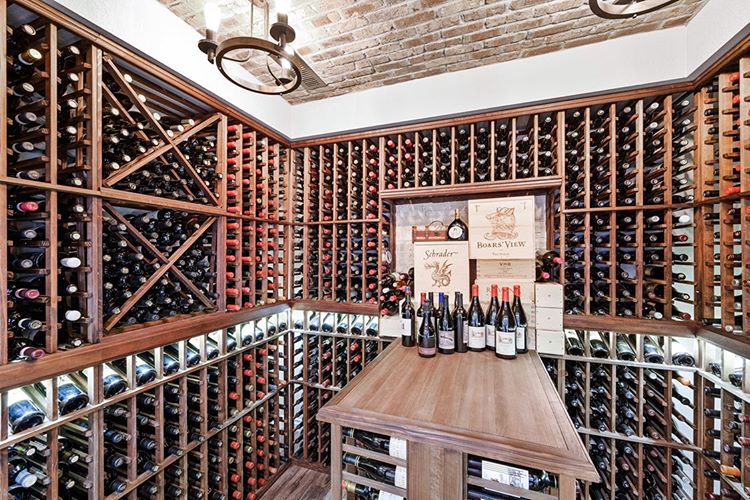
While temperature and humidity are the stars of optimal fine wine storage, air quality is the supporting actor. Wine “breathes” through the microscopic pores of the cork. If the air in your climate controlled wine cellar is stagnant or contains strong odors (such as paint fumes, cleaning chemicals, or even strong-smelling food), those scents can eventually penetrate the cork and taint the wine.
A professional luxury wine storage solutions setup will include an active carbon filtration system to ensure the air remains neutral. This is a critical component of fine wine preservation, especially for rare wine bottles that may be resting for thirty years or more.
Optimal Fine Wine Storage: Organizing the Inventory
Investment grade wine storage is not just about the environment; it is about management. You cannot protect what you cannot track. As your collection grows, long term wine cellaring requires a sophisticated inventory system.
Effective management involves:
- Cataloging the purchase price and date for tax and insurance purposes.
- Tracking the “drinking window” for each bottle of collectible wine.
- Monitoring the precise location of each bottle within your professional wine storage
At Vintage Cellar, we recommend digital inventory tools that integrate with your optimal fine wine storage hardware, providing alerts if the wine cellar humidity monitor detects a drop in moisture or if the temperature deviates from the best temperature for aging wine.
 Protecting Rare Wine Assets from Natural Disasters
Whether you are using a home-based climate controlled wine cellar or a third-party professional wine storage unit, you must account for the unexpected. Protecting rare wine assets involves more than just a good thermostat; it requires a disaster recovery plan.
- Power Outages: Does your optimal fine wine storage have a generator backup?
- Earthquakes/Vibration: Are your racks secured? For vibration free wine storage, racks should be bolted to the floor with dampening material.
- Insurance: Does your policy cover “breakage” and “spoilage” due to mechanical failure?
A robust insurance policy is a fundamental part of investment grade wine storage. Without it, your efforts in fine wine preservation are only partially complete.
The Long-Term Vision for Long Term Wine Cellaring
Ultimately, the goal of optimal fine wine storage is to reach the wine’s peak maturity. Some rare wine bottles, such as high-acid Rieslings or tannic Cabernet Sauvignons, can take decades to fully reveal their complexity.
Long term wine cellaring is a test of patience. By choosing the best temperature for aging wine and investing in UV protection for wine collection, you are ensuring that when you finally pull the cork, the wine is exactly as the winemaker intended. Whether you utilize bonded wine storage benefits or a custom luxury wine storage solutions project, your commitment to the environment is what will define the success of your collection.
Conclusion: The Vintage Cellar Standard
In the world of fine wine, there are no shortcuts to excellence. To truly choose the right storage for fine wine, one must be willing to invest in the technology and expertise required for protecting rare wine assets. From the precision of a wine cellar humidity monitor to the financial advantages of bonded wine storage benefits, every detail contributes to the ultimate goal of fine wine preservation.
At Vintage Cellar, we provide the consultancy and services necessary to navigate the complexities of optimal fine wine storage. We help you source the rare wine bottles that define a world-class collection and provide the professional wine storage environments that guarantee their longevity.
Don’t leave your collectible wine to chance. By implementing vibration free wine storage, maintaining the best temperature for aging wine, and ensuring rigorous UV protection for wine collection, you are securing a liquid legacy. Trust in the science of long term wine cellaring, and your patience will be rewarded with every spectacular glass you pour.
Whether you are seeking a climate controlled wine cellar for your home or looking to leverage investment grade wine storage in a bonded facility, Vintage Cellar is your partner in excellence. Secure your assets today by contacting Vintage Cellar today and enjoy the peace of mind that comes with optimal fine wine storage.