Building a Liquid Legacy: Where and How to Buy Vintage Wine Securely
Navigating the 2026 Market Rebound
For high-net-worth individuals (HNWIs) and institutional wealth managers seeking robust alternative assets, the contemporary macroeconomic landscape has forced a dramatic reassessment of wealth preservation strategies. Traditional cash reserves and fixed-income yields are continuously eroded by shifting central bank policies and rate cuts, prompting a massive rotation of capital into physical collectibles that possess absolute, physical scarcity. Among these tangible assets, rare viticulture has returned to the forefront of wealth-preservation discussions. Historically, the strategic decision to buy vintage wine and build a structured portfolio has served as an exceptional hedge against capital market distress. During the 2008 global financial crisis, for instance, when the S&P 500 plummeted by 38%, the price of fine wine dipped by only 9% before launching a swift, highly resilient recovery.
As we progress through the first half of 2026, empirical data indicates that the fine wine market has reached an extraordinary cyclical turning point. After enduring a near three-year correction following the pandemic-era peak of October 2022, prices across major wine-producing regions stabilized in late summer 2025. The benchmark Liv-ex Fine Wine 100 index bottomed out in August 2025 and has since recorded an impressive, uninterrupted six-month rising streak as of early 2026. This clear stretch of growth represents a major structural recovery in the global vintage wine market, making the early months of 2026 an ideal window of opportunity for collectors to secure blue-chip assets at highly favorable entry prices.

This recovery in the vintage wine market is backed by a substantial surge in trading activity and secondary market liquidity. In January 2026, the secondary trade value on the London International Vintners Exchange (Liv-ex) jumped by 21.7% month-over-month, while trade volume surged by 27.9%. These volumes are roughly 20% higher than the average trade levels recorded in the latter half of 2025, signaling that market confidence is returning rapidly across both Old and New World regions. High-value, ultra-premium assets are leading this charge. For example, the prestigious Domaine de la Romanée-Conti (DRC) Romanée-Conti 2022 commanded a market price of £150,000 per 12-bottle case, while cult New World icons like Screaming Eagle Cabernet Sauvignon 2023 traded at an astonishing £20,532 in early 2026. Under these conditions, finding high-quality vintage wine for sale is a priority for high-net-worth individuals (HNWIs) seeking to capitalize on early rebound phases.
Furthermore, institutional demand is expanding rapidly. According to the “WineCap Wealth Report 2026,” an overwhelming 97% of surveyed wealth managers and private financial advisors anticipate a substantial increase in client demand for fine wine throughout the year. Over a third of active collectors now allocate between 21% and 30% of their total investment capital specifically to fine wine, demonstrating that viticulture is no longer a fringe hobby but a central component of modern wealth management. Consequently, those looking to secure high-quality wine for investment are acting quickly to deploy capital.
However, entering this market requires an acute understanding of regional dynamics and international trade policies. In February 2026, the US Supreme Court struck down the restrictive International Emergency Economic Powers Act (IEEPA) duties enacted in 2025. Yet, the US administration immediately responded by implementing a 10% blanket import tariff on European Union wines under Section 122 of the Trade Act of 1974. This tariff authority is legally capped at up to 15% and 150 days, meaning this temporary regime is scheduled to lapse in late July 2026 unless further legislative action is taken. While these political maneuvers can cause short-term regional pricing disparities, the long-term upward trajectory of rare wine remains structurally sound. To navigate these market shifts, collectors are turning away from self-directed purchases. This is precisely where the specialized, data-rich ecosystem of Vintage Cellar provides a critical advantage. Rather than navigating the complex and unregulated secondary market alone, collectors can partner with trusted advisors to build an authentic, appreciating, and tax-efficient portfolio that will endure for generations.
To capitalize on this recovery, collectors must understand the broader index trends. The table below outlines the 5-year performance of key regional indices, illustrating why current stabilized market conditions present an ideal buying window :
| Index Name | 5-Year Performance Trend | Primary Asset Class Focus | Current Market Role |
| Liv-ex Fine Wine 100 | -4.8% | 100 most sought-after fine wines | Industry leading benchmark |
| Bordeaux Legends 40 | -10.7% | 40 exceptional older Bordeaux vintages | Capital preservation baseline |
| Burgundy 150 | +6.3% | 15 active red and white Burgundy labels | Scarcity-driven growth vehicle |
| Champagne 50 | +11.7% | 16 most actively traded champagnes | High-performance liquidity engine |
Sourcing Strategy: Traditional Retail vs. Private Advisory
Determining where to buy vintage wine securely requires careful analysis. The secondary viticultural market is notoriously opaque, and the structural limitations of purchasing through standard, public-facing retail channels are vast. Walking into a neighborhood vintage wine store and expecting to secure investment-grade assets with pristine provenance is a massive risk. A standard retail outlet, even a self-described grand cru wine shop & cellar, typically relies on multi-tiered commercial distribution networks. These bottles have frequently changed hands multiple times, traveling through various distributors, importers, and retail shelves. Every link in this chain represents a potential failure in environmental control. Exposure to excessive heat, rapid temperature swings, low humidity, or vibrations during transit can permanently compromise the wine’s flavor profile and aging trajectory, reducing its future market value to zero.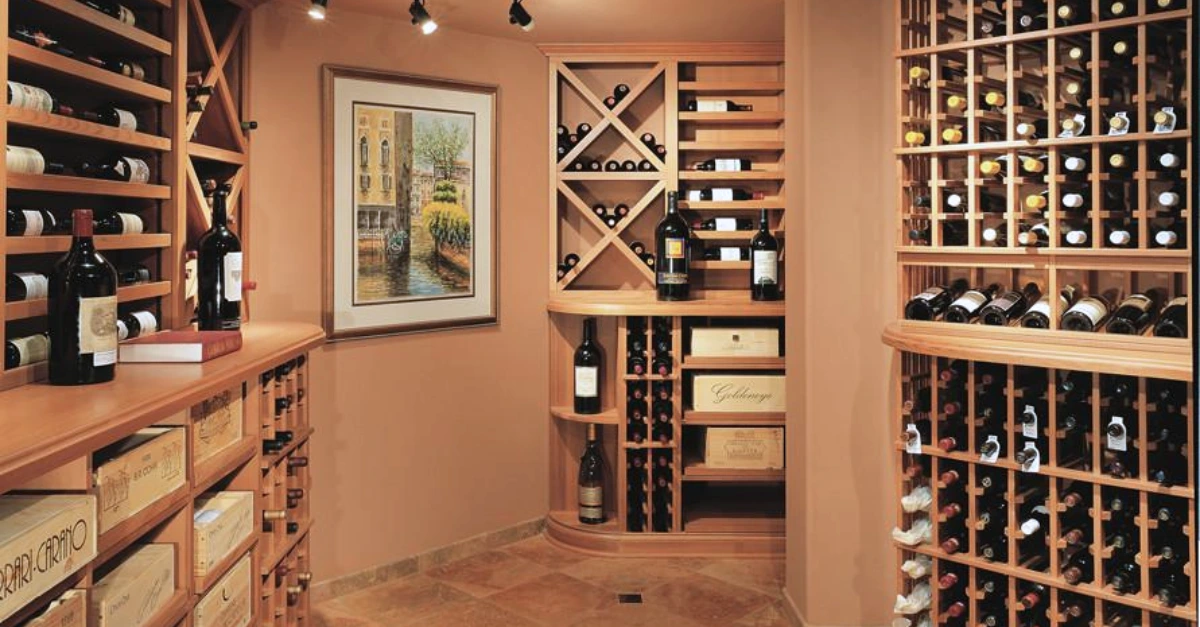
Furthermore, public auction houses and open online marketplaces are plagued by structural vulnerabilities. When you source from public auctions, transactions are almost universally conducted on an “as-is” basis, legally shifting the entire burden of due diligence onto the buyer. Label fraud and physical counterfeiting have escalated into a highly sophisticated, multi-million-dollar global industry. The shadow of Rudy Kurniawan who single-handedly manufactured and sold over $130 million worth of counterfeit Burgundy and Bordeaux in the early 2000s still looms large. Experts estimate that millions of dollars of Kurniawan’s highly convincing fakes continue to circulate globally, frequently resold by unaware or unscrupulous brokers.
Contemporary fraudsters employ incredibly advanced techniques, including using acid-treated aged paper stock to mimic historical labels, forging period-accurate fonts, and applying tea or wine residue to simulate decades of cellar dust. If you find vintage wine for sale on public platforms, you face structural risks that can undermine your entire capital allocation. To counter these threats, elite collectors must bypass public channels entirely. This is why the vintage cellar private advisory network is superior. Rather than buying from open markets where provenance is uncertain, collectors receive curated fine wine selections sourced directly from prestigious estates.
By partnering with Vintage Cellar, counterfeit risk is completely eliminated because our expert team utilizes advanced forensic verification. This absolute security is achieved through a multi-layered approach to provenance and state-of-the-art forensic technology. Every bottle in our network is sourced directly from renowned estates and trusted producers, ensuring a flawless, unbroken chain of custody. To verify acquisitions that do not come directly from estate cellars, our team of specialists utilizes advanced authentication technologies :
- Chaosmetry-Based Security (Prooftag Bubble Tag®): Prominent estates like Château Smith Haut Lafitte utilize these tamper-proof, non-reproducible seals affixed to the capsule and bottle neck. Each seal features a chaotic polymer bubble pattern that acts as a unique physical fingerprint, verifiable via a smartphone scan against the producer’s CertiTRACK online database.
- Chai Vault Blockchain Ledger: This cryptographic system tracks 60 separate physical authenticity markers on a single bottle ranging from cork density to micro-etchings on the glass storing this digital passport on an immutable ledger.
- Physical Label Analysis: Utilizing 400x ultra-zoom cameras and ultraviolet light to analyze ink density, paper composition, and identify synthetic post-1960s glues.
- Nuclear Magnetic Resonance (NMR) Spectroscopy: This non-invasive chemical profiling technique allows laboratories to verify the exact estate of origin by analyzing the molecular structure of the liquid without ever removing the cork.
For those looking to buy vintage wine with absolute confidence, this forensic security is indispensable. Sourcing directly from certified producers ensures your collection remains protected from fraudulent stock.
Strategic Diversification: Finding the “Liquidity Engines”
Constructing a resilient fine wine collection requires the same disciplined asset allocation as a traditional investment portfolio. Spreading capital across different wine-producing regions, vintages, and holding periods is essential to cushion against the cyclical performance of individual sub-markets and maximize risk-adjusted returns. For those who strategically buy vintage wine, the structural foundation is typically Bordeaux, which historically represents approximately 40% of the secondary market by value. The legendary Bordeaux First Growths Château Lafite Rothschild, Château Margaux, Château Latour, Château Mouton Rothschild, and Château Haut-Brion offer unmatched liquidity, scale, and pricing transparency. Data indicates that the optimal entry window for Bordeaux red wine is between 5 and 7 years of age, with the optimal liquidation exit occurring before the wine reaches 25 years.
To balance these stable stabilizers, investors add scarcity-driven growth assets. Burgundy Grand Crus, such as those from Domaine de la Romanée-Conti (DRC) or Domaine Leroy, are highly sought after due to their extremely limited production. For consistent long-term returns, selecting these premium wine for investment options is highly effective. Additionally, modern portfolios must allocate capital to “liquidity engines” assets with massive global brand equity and steady trading volume, such as Super Tuscans (Sassicaia, Tignanello, Ornellaia, Masseto) and Prestige Champagne (Dom Pérignon, Krug).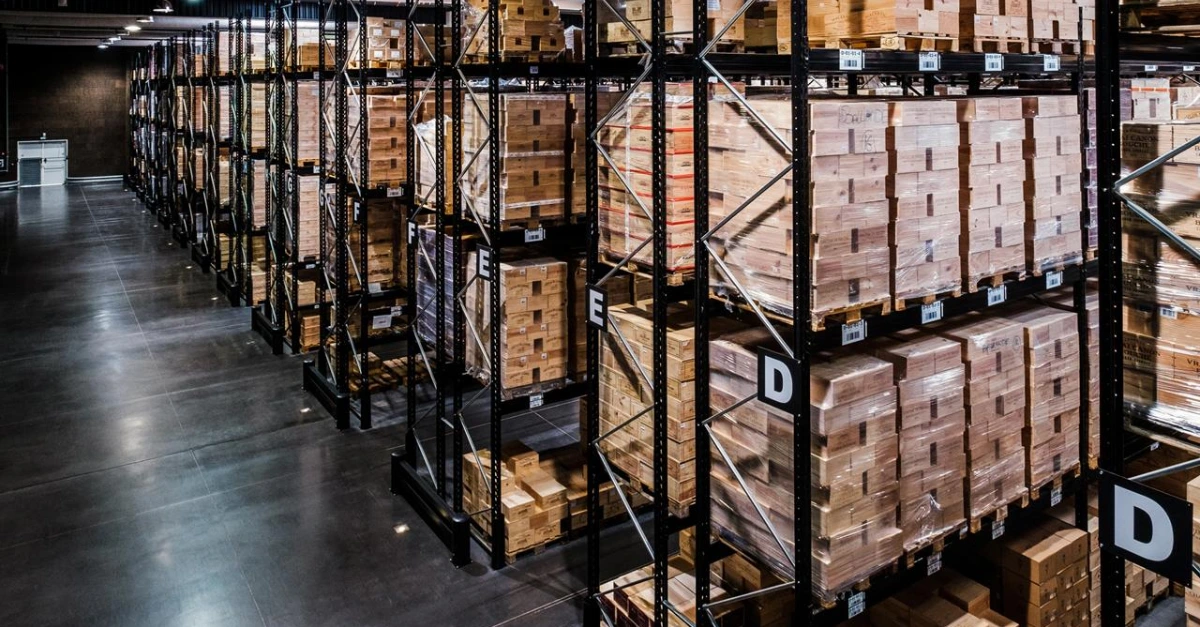
When you analyze the vintage wine market, a major structural shift in consumer demand is evident. Since 2010, the value of sparkling wine traded on the secondary exchange has grown by an extraordinary 1,100%, while white wine trade has surged by 650%. Conversely, the total value of red wine traded in 2025 was 15% lower than in 2010, underlining a structural shift in buying behavior rather than a short-term anomaly. White Burgundy, in particular, has demonstrated remarkable price stability and trade volume resilience, making it an excellent diversifier during periods of market uncertainty.
To identify successful vintages, collectors often consult the wine enthusiast vintage chart. This tool provides generalized ratings for regions and harvest years, helping collectors understand expected wine quality and maturation potential. However, under modern climate chaos which includes severe droughts, heat waves, and spring frosts you cannot rely solely on the wine enthusiast vintage chart. Localized weather anomalies mean that a single estate can produce a spectacular 100-point wine even during a challenging year. This is why a private advisory’s curated fine wine selections are invaluable. Collectors looking to buy vintage wine must work with specialists who possess the real-time data to look beyond generalized charts.
Turnkey Blueprints: Curated Cellar Plans 2026
For aspiring investors, starting a collection from scratch can be logistically and administratively overwhelming. Researching producers, coordinating international transport, and securing proper storage require substantial time and expertise. To eliminate this operational complexity, the vintage cellar concierge team offers structured, turnkey investment blueprints through our highly sought-after cellar plans 2026.
These pre-diversified packages are curated by our expert analysts to deliver immediate geographic and vintage balance. The premier entry point is Cellar I: The Discovery, a curated package priced at €8,130 that comprises 60 bottles. This plan includes exceptional white and red viticulture:
- Meursault la Barre 2023 (Armand Heitz)
- Sauvignon Blanc 2019 (Eisele Napa Valley)
- Châteauneuf du Pape white Arioso 2021 (Mounir Saouma)
- Meursault 1er Cru Blagny 2022 (Guillaume Boillot)
- Château Latour à Pomerol 2023
- Pommard 1er Cru Clos des Poutures Monopole 2023 (Armand Heitz)
- Châteauneuf du Pape red Omnia 2022 (Mounir Saouma)
- Altagracia 2019 (Eisele Napa Valley)
- Château Figeac 2019
- Barolo Falletto 2015 (Bruno Giacosa)
For those who want to study the framework of collection construction, our cornerstone guide on how to start a wine collection offers a complete roadmap. To view our full range of tailored packages, explore our dedicated page on vintage cellar plans.
For beginners starting their journey, our first wine collecting tips for beginners is to avoid home storage for investment-grade bottles. Storing high-value assets at home is a massive risk. While countertop coolers are affordable, larger freestanding wine refrigerators range from $1,500 to $8,000, and closet conversions can easily cost between $5,000 and $15,000. Converting a basement can cost between $15,000 and $50,000, while a custom luxury build can exceed $200,000. Additionally, home storage lacks professional visual condition reports, secure chain of custody, and automatic valuation tracking, which can hurt your resale value in the secondary market.
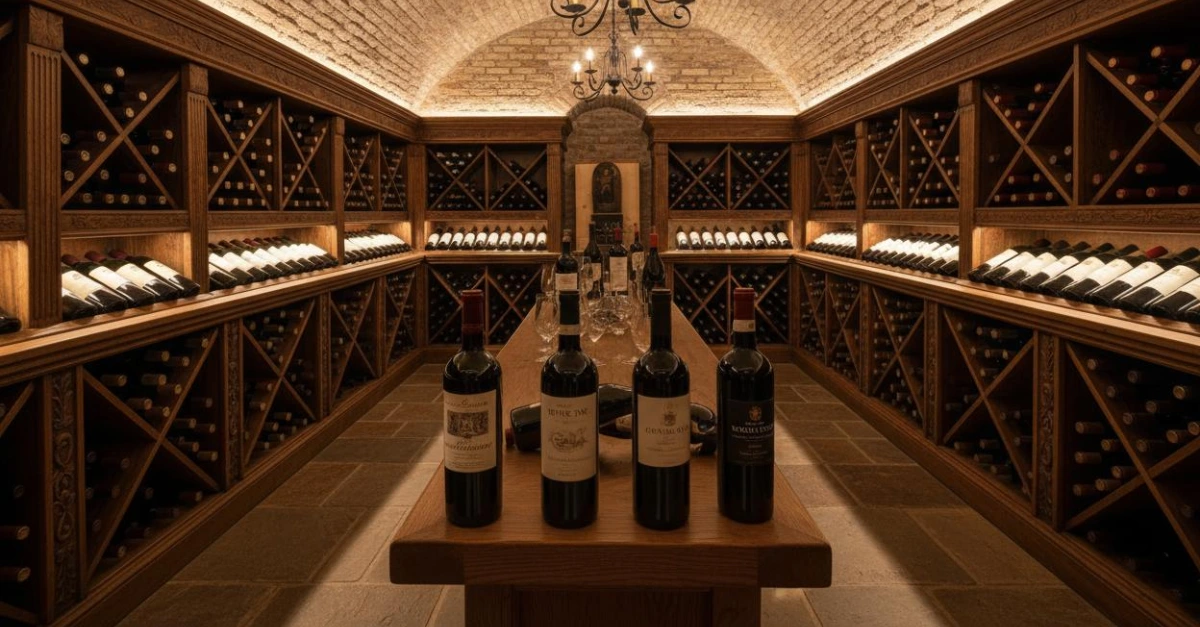
This is why storing in bond within professional, climate-controlled bonded warehouses is the industry standard. Bonded storage offers significant tax benefits, as VAT and excise duties are deferred as long as the wine remains in bond. If you eventually decide to sell your wine, you can execute the sale while it is still in bond, completely avoiding these tax liabilities and maximizing your net returns. When you buy vintage wine through our platform, your collection is securely stored in our Bordeaux facility in partnership with Hillebrand, fully insured at market value for a flat annual rate of 1.5%. Every comprehensive guide detailing wine collecting tips for beginners emphasizes that professional bonded custody is the single best way to protect your capital and ensure maximum liquidity. This makes our curated cellar plans 2026 the perfect hands-free entry point for discerning investors.
FAQ Segment: The Case for Buying Wine by the Case
Understanding the practical details of viticultural investment is key to maximizing returns. Here are answers to the most common questions from collectors:
Why is buying wine by the case superior to buying individual bottles for investment?
For serious investors, it is highly recommended to buy vintage wine in full case formats ideally in an Original Wooden Case (OWC) or Original Cardboard Case. Sourcing complete cases of 6 or 12 bottles provides several major advantages:
- Provenance and Chain of Custody: A full case stored in bond has an unbroken paper trail and a unique rotation number assigned by the warehouse. This continuous chain of custody is highly valued by secondary market exchanges like Liv-ex, whereas individual bottles are harder to track and verify.
- Sequential Tasting: Fine wine is a living asset that evolves over decades. Sourcing a case allows you to open one bottle today, another in three years, and another a decade later, enjoying its evolution firsthand while the rest of the case appreciates.
- Financial Value: Most premium wineries and brokers offer significant bulk discounts of 10% to 20% on case purchases compared to individual bottles. When you eventually decide to sell, full cases are highly liquid and command premium prices on the secondary market.
If you are looking for premium vintage wine for sale, purchasing full cases through a trusted vintage wine store or private advisory is the gold standard.
How do professional cellar plans 2026 protect beginners?
Our pre-curated cellar plans 2026 are designed to eliminate common mistakes, such as over-allocating capital to speculative “trend” wines that lack secondary market liquidity. These plans provide immediate, professional diversification and ensure that all logistics, secure storage, and insurance are fully managed from day one. This is one of the most valuable wine collecting tips for beginners for protecting physical assets.
What ongoing storage fees should an investor expect to pay?
With Vintage Cellar, our comprehensive bonded storage and insurance plan is priced at a flat annual rate of 1.5% of the invoice value per bottle. This rate includes temperature-controlled warehousing in Bordeaux, full insurance at current market value, and monthly inventory reports. This simple, transparent fee structure eliminates hidden administrative fees, box handling charges, or retrieval costs that often accumulate in standard self-storage facilities.
Conclusion
As the secondary vintage wine market continues its robust recovery throughout 2026, the current stabilized pricing represents a highly lucrative buying window. However, success in this alternative asset class depends entirely on your sourcing, storage, and authentication protocols. Avoiding the retail markups of a local grand cru wine shop & cellar and bypassing public auction scams is the first step toward long-term capital preservation.
By partnering with the vintage cellar network, you secure authentic wine for investment sourced directly from renowned estates. Our expert advisors assist in building your liquid legacy, providing bespoke curated fine wine selections to match any portfolio strategy. To buy vintage wine securely, a structured approach is mandatory. Whether visiting a prestigious grand cru wine shop & cellar online or working with a private concierge, verifying provenance remains paramount.
To celebrate this market recovery, Vintage Cellar is delighted to offer new members an exclusive 20% OFF on your first acquisition. Contact our team of expert collection managers today to secure a professional portfolio consultation, select from our curated cellar plans 2026, and take the first step toward building a secure, appreciating vinicultural legacy. Make the ultimate move to buy vintage wine securely and preserve your generational wealth.